Ambulatory Blood Pressure Monitoring
Ambulatory Blood Pressure Monitoring (ABPM) is a highly accurate method of measuring blood pressure throughout the day and night while you continue your normal activities. Instead of relying on a single clinic reading, ABPM captures multiple blood pressure readings over 24 hours to provide a complete picture of how your blood pressure behaves in real life. This is especially useful in diagnosing hidden hypertension, white-coat hypertension, or assessing how well your treatment is working. As nephrologists, we use ABPM to better understand blood pressure patterns and design the most effective treatment plans for long-term kidney and heart protection.
When ABPM May Be Recommended
Your doctor may advise ABPM in several situations to get a clearer understanding of blood pressure control:
- White-coat hypertension: When BP is high in the clinic but normal at home.
- Masked hypertension: When BP is normal in the clinic but high outside.
- Fluctuating or uncontrolled BP: Despite medications.
- Morning blood pressure spikes: A common cause of stroke or heart events.
- Suspected nighttime hypertension: BP that stays high during sleep.
- Review of treatment response: To check if current medications are effective.
How ABPM Helps in Diagnosis and Treatment
ABPM gives detailed and accurate information about blood pressure variations. This helps in:
- Identifying true hypertension: Avoids misdiagnosis from single clinic readings.
- Assessing nighttime BP: Important for kidney and heart protection.
- Detecting high-risk patterns: Such as non-dipping BP at night.
- Customizing treatment plans: Adjusting medication timing and dosage based on actual BP trends.
- Preventing organ damage: By early detection of abnormal BP patterns.
Procedure and What Patients Can Expect
ABPM is simple, safe, and non-invasive. The monitor automatically records BP without needing to visit the clinic repeatedly. You can expect:
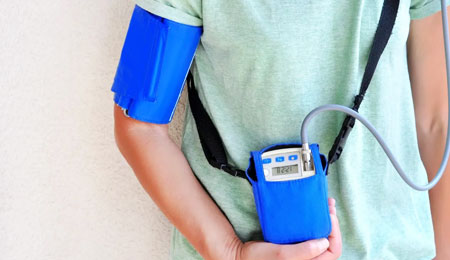
- A BP cuff and small monitor worn around the waist or shoulder.
- Automatic readings every 20–30 minutes during the day and 30–60 minutes at night.
- No interruption of routine activities — you can work, walk, and sleep normally.
- A detailed 24-hour report analyzing BP variations across the day.
- No risks or side effects, except mild discomfort from cuff inflation.
Benefits of Ambulatory Blood Pressure Monitoring
ABPM is considered the gold standard for accurate hypertension assessment. Key benefits include:
- Accurate diagnosis of real-life blood pressure levels
- Better control of hypertension and reduced risk of complications
- Improved treatment decisions based on true BP patterns
- Identification of nighttime hypertension and high morning readings
- Lower risk of stroke, heart disease, and kidney damage
When to Seek Medical Advice
You should consult a specialist for ABPM if you experience symptoms or have BP readings suggesting poor control. Seek medical attention if:
- Your BP fluctuates widely at home
- You suspect white-coat or masked hypertension
- You have kidney disease, diabetes, or heart disease
- Your morning BP stays high despite treatment
- You develop headaches, dizziness, or breathing difficulty
ABPM is a valuable tool for diagnosing and managing hypertension with precision. By providing a complete 24-hour blood pressure profile, it helps in creating individualized treatment plans that protect both heart and kidney health. Our goal is to ensure accurate diagnosis, effective management, and long-term wellness for every patient.
